
Protects against:
- Typhoid fever, caused by Salmonella Typhi
Who should get it:
- Recommended by WHO for routine childhood immunization, given as a single dose to infants and children from 6 months of age
- Also recommended for adults up to age 45, and in catch-up campaigns in typhoid-endemic regions for children up to age 15
- Travelers to areas with recognized risk of S. Typhi exposure, particularly those with prolonged exposure to potentially contaminated food and drink
- People living in or relocating to typhoid-endemic regions (South Asia, including Pakistan, sub-Saharan Africa, parts of Latin America)
- Food handlers, especially in outbreak-prone or endemic settings
Schedule:
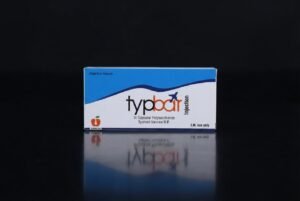
Typbar-TCV (typhoid conjugate vaccine — Vi polysaccharide conjugated to tetanus toxoid):
- Single 0.5 mL dose, given intramuscularly, expected to provide long-lasting protection in adults, children, and infants over 6 months
- No booster series required — this is the WHO-preferred modern formulation
Older alternatives (for reference, if stocked):
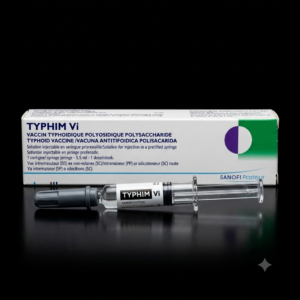
- Typhim Vi (Vi polysaccharide, non-conjugate): single 0.5 mL IM dose for adults and children; reimmunization recommended every 2 years under conditions of continued exposure
- Vivotif (live oral Ty21a): 4 capsules taken every other day, for travelers ≥6 years old, completed at least 1 week before travel
Duration of protection:
- Typhoid conjugate vaccines (TCVs) provide strong protection for at least 4 years from a single dose
- Older Vi polysaccharide vaccines have shorter-lived protection, requiring reimmunization roughly every 2 years
Why vaccinate:
- Typhoid fever can cause prolonged high fever, intestinal bleeding or perforation, and death if untreated
- Spreads through contaminated food and water — a major risk in areas with poor sanitation infrastructure
- TCVs prevented 79–85% of typhoid cases in large Phase 3 trials in children 9 months to 16 years old
- Typbar-TCV can be safely co-administered with other routine childhood vaccines, including measles-rubella, yellow fever, meningococcal A, polio, and HPV
Important note:
- Acute infection or febrile illness may be reason to delay vaccination, unless withholding the vaccine poses a greater risk
- Typhim Vi should not be used to treat a patient already diagnosed with typhoid fever
- Pregnancy: Typhim Vi may be used only when clearly indicated; the manufacturer recommends against vaccination in the first trimester
- Vaccines are not 100% effective — travelers and residents in endemic areas should still follow safe food and water practices
- Given Pakistan’s status as a typhoid-endemic country with documented XDR (extensively drug-resistant) typhoid strains, Typbar-TCV is generally the preferred choice for your clinic population over the older Vi-polysaccharide or oral formulations, given its single-dose convenience and longer duration of protection.